
Powerboat transport is a serious endeavor, and while it may seem daunting, following a step-by-step checklist can make the process smooth and successful. Whether moving your power boat by road or sea, knowing the technical details can ensure everything goes as planned. As a seasoned captain with deep industry connections, I’ve seen it all and am here to guide you through every essential step. Let’s break down the entire process in this power boat transport checklist so you can rest easy, knowing your vessel is in good hands.
Why 5DollarDepositCasinos Says Low Deposit Limits Are Reshaping New Zealand Online Gambling
The New Zealand online gambling market has undergone a quiet but significant structural shift over the past several years, driven not by sweeping legislative reform but by a more granular change in how platforms set their minimum deposit thresholds. Where once NZ$20 or NZ$30 was considered a standard entry point for new players, a growing number of internationally licensed operators now accept deposits as low as NZ$5. This change is not cosmetic. It reflects deeper shifts in player demographics, payment infrastructure, and the competitive dynamics of a market that sits in a legally ambiguous but practically active space. Understanding why this is happening — and what it means for players, operators, and regulators — requires looking beyond surface-level marketing and into the mechanics of how online gambling actually functions in New Zealand.
The Regulatory Context That Made Low Deposits Possible
New Zealand’s gambling legislation is anchored primarily in the Gambling Act 2003, which was drafted before online gambling had become a mainstream consumer activity. That Act prohibits operators from being based onshore and offering interactive gambling services, but it does not explicitly criminalise New Zealand residents from accessing offshore platforms. This legislative gap has created a de facto open market where dozens of operators licensed in jurisdictions such as Malta (under the Malta Gaming Authority), Gibraltar, Curaçao, and the Isle of Man legally serve New Zealand players without any domestic licensing requirement.
Because these operators are not subject to New Zealand-specific deposit minimums, responsible gambling thresholds, or consumer protection mandates enforced by a local body, they have considerable latitude in how they structure their products. The Department of Internal Affairs, which oversees domestic gambling compliance, has focused its enforcement efforts on land-based venues and the TAB, leaving the offshore digital market largely unaddressed. This regulatory vacuum has allowed operators to compete aggressively on terms that include deposit minimums, bonus structures, and payment method diversity.
The practical consequence is that a platform licensed in Malta, for instance, can offer a NZ$5 minimum deposit to a New Zealand player without violating any law that either jurisdiction would actively enforce against the player. This is the structural foundation on which the low-deposit segment has been built. It is not a loophole being exploited so much as it is an unaddressed gap that has been filled by market forces. The Gambling (Harm Prevention and Minimisation) Amendment Act discussions that have periodically resurfaced in New Zealand’s parliamentary calendar have not yet produced legislation that would bring offshore operators under a domestic licensing framework, meaning the current environment is likely to persist for the foreseeable future.
Why Operators Are Reducing Deposit Minimums and What It Signals
Reducing a minimum deposit from NZ$20 to NZ$5 is not a trivial operational decision. It affects payment processing economics, bonus liability calculations, fraud risk profiles, and customer acquisition cost models. The fact that operators are making this change in meaningful numbers signals that the economics have shifted in a way that makes low-deposit players more attractive than they were five or ten years ago.
One factor is the maturation of instant payment infrastructure in New Zealand. The adoption of POLi, direct bank transfers, and increasingly e-wallets like Skrill and Neteller has reduced the per-transaction cost for small deposits. When credit card processing fees represented a fixed percentage plus a flat fee, processing a NZ$5 deposit might have been economically irrational. With modern payment rails that carry lower fixed costs, the unit economics have improved. Cryptocurrency acceptance, which a subset of operators have introduced since roughly 2019, further reduces processing costs and enables micro-transactions that would be impractical through traditional banking channels.
A second factor is the demographic composition of new player cohorts. Younger New Zealand adults who grew up with mobile-first financial products — including buy-now-pay-later services, micro-investment apps, and digital banking — are accustomed to platforms that allow engagement with small amounts of money. These players are not necessarily low-value over a lifetime; they may graduate to higher deposits as their disposable income increases and their trust in a platform is established. Operators have recognised that a NZ$5 deposit is often a trial mechanism, not a permanent spending ceiling, and have adjusted acquisition strategies accordingly.
Research compiled by analysts tracking the Australasian gambling market has noted that player retention rates among those who begin with low deposits and are given appropriate onboarding experiences can match or exceed those of players who deposit larger initial amounts. The initial deposit size is less predictive of long-term value than operators once assumed. This finding has been influential in shifting internal models at several operators serving the New Zealand market.
Industry commentary platforms that track these developments — including the resource at http://5-dollar-deposit-casinos.com, where deposit structures and operator terms for the New Zealand market are catalogued — have documented how the range of operators accepting NZ$5 deposits expanded substantially between 2020 and 2024, with the number of qualifying platforms roughly doubling over that period according to their tracking data.
How Low Deposit Limits Are Changing Player Behaviour and Market Access
The most direct effect of reduced deposit minimums is an expansion of the addressable player population. New Zealand has a population of approximately five million people, and the proportion of adults who engage with online gambling in some form has been estimated at between 15 and 20 percent in various surveys conducted since 2018. Within that group, a meaningful segment had previously been excluded not by lack of interest but by the practical barrier of a NZ$20 minimum deposit. For a student, a casual worker, or someone on a fixed income who wants to engage with online casino games as a form of entertainment with a strictly limited budget, a NZ$20 floor is a genuine obstacle. A NZ$5 floor is not.
This matters for several reasons that go beyond simple market expansion. From a harm minimisation perspective, there is a reasonable argument that lower deposit floors, when combined with robust self-limitation tools, allow players to engage with smaller amounts rather than feeling compelled to deposit more than they intended simply to meet a platform minimum. The counterargument — that lower barriers increase overall participation and therefore aggregate harm — is also valid and is taken seriously by gambling health researchers. The net effect depends heavily on what tools operators provide alongside the low deposit option, and this varies considerably across the market.
5DollarDepositCasinos has observed in its analysis that the platforms most successful at retaining low-deposit players over time tend to be those that pair the low minimum with clear session limit tools, loss limit options, and transparent terms around bonus wagering requirements. Platforms that use the low deposit primarily as an acquisition hook without supporting responsible gambling infrastructure tend to see higher churn rates and lower lifetime player value, which suggests the market is beginning to self-correct toward more sustainable models.
Player behaviour data also suggests that the availability of low deposit options has shifted the timing of first deposits. When minimums were higher, players who discovered a platform through free play or demo modes often delayed their first real-money deposit by weeks or months while they accumulated enough disposable funds to feel comfortable meeting the threshold. With a NZ$5 minimum, the conversion from free play to real-money play happens faster, which has implications for both operator revenue timing and for how quickly players encounter the real-money experience — including its risks.
The payment method landscape in New Zealand has also evolved in ways that specifically facilitate small deposits. The New Zealand banking system’s adoption of faster payment infrastructure, combined with the growth of prepaid card options and e-wallets that can be loaded incrementally, means that a player can now fund a NZ$5 deposit from a variety of sources without needing a credit card or a traditional bank account with overdraft facilities. This has extended market access to demographics that were previously underserved by the standard online gambling payment stack.
Implications for Responsible Gambling Frameworks and Future Regulation
The expansion of low-deposit gambling in New Zealand raises questions that the current regulatory framework is not well-equipped to answer. The Gambling Act 2003 was designed for a world of physical venues, fixed odds betting terminals, and lottery products. Its harm minimisation provisions — mandatory self-exclusion schemes, problem gambling levies on operators, and requirements for harm awareness messaging — apply to domestic operators. Offshore operators serving New Zealand players are not subject to these requirements, though some voluntarily implement equivalent measures to meet the standards of their home licensing jurisdictions.
The Malta Gaming Authority, for example, requires its licensees to implement responsible gambling tools including deposit limits, reality checks, and self-exclusion mechanisms that connect to pan-European exclusion registries. A New Zealand player using an MGA-licensed platform benefits from these protections even without domestic regulatory oversight. However, operators licensed in Curaçao — which has historically had a more permissive licensing regime — may not offer equivalent protections, and the New Zealand player has no domestic recourse if problems arise.
The New Zealand government’s 2021 review of the Gambling Act, which produced a series of recommendations but has not yet resulted in comprehensive legislative reform, identified offshore online gambling as a priority area for future attention. One of the options under consideration has been an opt-in licensing regime that would allow offshore operators to obtain a New Zealand licence in exchange for meeting local responsible gambling standards, paying a problem gambling levy, and submitting to local dispute resolution mechanisms. Such a framework, if implemented, would likely include standardised rules around deposit minimums and associated harm reduction tools.
Until such legislation passes — and there is no confirmed timeline — the market will continue to be shaped by the voluntary practices of operators and the informational resources available to players. Sites that track and compare operator terms, including deposit minimums, bonus conditions, and responsible gambling tool availability, play a practical role in this environment by helping players make more informed choices. The growth of this information layer is itself a market response to regulatory absence.
From an international perspective, New Zealand’s situation is not unique. Australia faces a similar dynamic, though the Interactive Gambling Act 2001 and its 2017 amendments have drawn clearer lines around certain product types, particularly in-play sports betting. The United Kingdom’s experience with the Gambling Act 2005 and the subsequent 2023 Gambling Act White Paper — which introduced affordability checks and stricter bonus regulations — provides one model for how a jurisdiction can bring offshore operators under a more comprehensive domestic framework. New Zealand policymakers have cited the UK experience in parliamentary discussions, though the political will to implement comparable measures has not yet crystallised.
What is clear from the trajectory of the past five years is that low deposit limits are not a passing trend. They reflect structural changes in payment technology, player demographics, and competitive market dynamics that are unlikely to reverse. The question for regulators, operators, and public health advocates is not whether NZ$5 deposits will remain a feature of the market — they will — but how the ecosystem around them develops. Whether that means voluntary industry standards, a formal licensing regime, or some combination of both will depend on decisions that are still being made.
The shift toward lower deposit minimums in New Zealand’s online gambling market is ultimately a story about access — who gets to participate, on what terms, and with what protections. The technology and market conditions that made NZ$5 deposits viable have arrived faster than the regulatory frameworks designed to manage their consequences. For players navigating this environment, the practical reality is that more platforms are accessible with less upfront commitment than at any previous point in the market’s history, and the responsibility for making that access safe sits, for now, in a shared space between operators, information providers, and individual players themselves.
How to Transport a PowerBoat
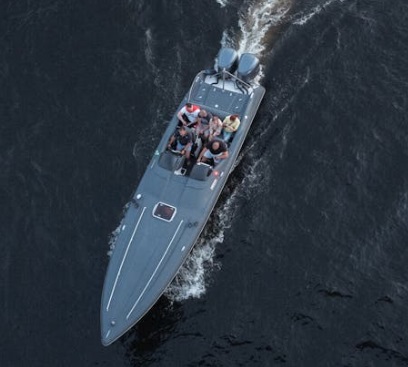
Transporting a power boat requires careful planning and attention to detail. Your chosen method will depend on your boat’s size, destination, and whether you’re moving it domestically or internationally.
1. Choose Your Transport Method
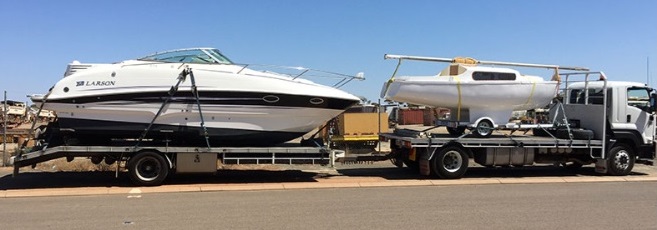
By Road: Transporting a power boat by road is often the best option for shorter distances. A specialized trailer designed for power boats will cradle your vessel safely.
By Sea: For international transport or longer distances, shipping your power boat on a cargo ship may be necessary. This method requires extra preparation but is the most effective way to move a large boat overseas.
2. Prepare Your Power Boat for Transport
Preparation is key to a successful move. Here’s what needs to be done:
Remove Loose Items: Secure or remove anything that could shift or cause damage during transport, such as personal belongings, electronics, and external equipment.
Lower or Remove External Structures: Masts, antennas, and other tall fixtures should be removed or lowered to ensure they don’t add unnecessary height to the boat, which could cause issues during transport.
Drain Fluids: Water and fuel tanks should be drained before transport to reduce weight and prevent potential leaks.
Inspect the Hull: The hull should be thoroughly inspected to ensure that no existing damage could worsen during the journey.
How Much Does It Cost to Transport a Power Boat?
The cost of power boat transport varies depending on several factors. This includes the size of the boat, the distance to be moved, and the method of transport.
Factors that Affect Power Boat Transport Cost
Size of the Boat: Larger boats require more specialized equipment and larger trailers, increasing costs.
Distance: The farther your boat needs to travel, the more expensive the transport will be. Cross-country moves or international shipping will naturally come at a higher cost.
Permits and Escorts: Permits and escort vehicles may be required for oversized loads, adding to the overall cost.
Average Costs
On average, transporting a power boat can cost anywhere from $1,000 to $5,000 or more for domestic moves, depending on size and distance. International shipping, however, can range from $10,000 to $30,000. Always contact power boat transport companies like Alpha Boat Transport for a more accurate quote.
How Do You Transport a Power Boat?
Moving a power boat involves several technical steps. It’s not just about getting the boat from point A to point B; safety and logistical considerations must be remembered.
Loading the Power Boat
Custom Trailers: A specialized trailer designed for power boats loads the vessel safely. The boat is carefully balanced and secured on the trailer to ensure stability throughout the journey.
Hydraulic Lifts: These are often used to gently lift and position the boat onto the trailer, reducing the risk of damage.
On the Road
Once your boat is loaded, the journey begins. For oversized boats, escort vehicles may be required to ensure that the transport truck can navigate safely. The transport team will monitor the boat throughout the journey to ensure everything remains secure.
Unloading the Power Boat
The same care is taken to unload the boat at the destination. Whether placed in the water or on land, the process is handled precisely to avoid potential damage.
How Much to Transport a Power Boat?
The final cost for powerboat transportation can vary significantly based on the specific details of the move. Here’s a breakdown:
Road Transport: For shorter distances, road transport is more affordable, usually ranging from $1,000 to $5,000, depending on the size and distance.
Sea Transport: For international moves, shipping your power boat on a cargo ship can cost significantly more, typically between $10,000 and $30,000.
To get an exact estimate, it’s essential to contact reputable power boat transport companies like Alpha Boat Transport for a detailed quote.
Why Choose Alpha Boat Transport for Power Boat Shipping?
Regarding powerboat transportation, you need a company with the expertise, equipment, and reliability to ensure a smooth move. Alpha Boat Transport is the premier choice for several reasons:
Expert Handling: With years of experience in the industry, we know how to transport a power boat with care and precision.
Comprehensive Services: From obtaining permits to handling the loading and unloading, Alpha Boat Transport provides an all-inclusive service.
All-Inclusive Quotes: We offer transparent, no-surprise pricing so you can confidently plan your move.
Trust Alpha Boat Transport with Your Power Boat Move
Transporting a power boat requires technical skill, planning, and the right equipment. Alpha Boat Transport has the expertise and industry connections to ensure your boat is moved safely and efficiently, whether you’re shipping it down the road or across the ocean. Don’t leave your power boat in just anyone’s hands—choose Alpha Boat Transport, the most trusted name in power boat transport.